

Public Notice
Project "TOMBOY" will be filming in Clark County, Nevada on the following, tentative, dates:
April 7th-9th, 2026
April 14th-16th, 2026
July 3rd-5th, 2026
September 2nd-15th, 2026
November 3rd-8th, 2026
The production is small and will comply with local ordinances and privacy norms. Questions? Contact our production team at 470.739.7301 or thetomboymovie@gmail.com.
If you prefer not to be on camera, let us know on site and we will avoid filming you or will blur faces in post.
"TOMBOY"
Documentary Film Project
— A Cinematic Origin Story (Rewritten & Unified)
In 1978 Las Vegas, a little girl is "battle born" into a connected family- native to NYC. Indigenous, by birth. sicilian‑american, by blood. As a small child, she is kidnapped into an alias and raised under the protection of the "old guys"—bookies, card sharks, business men and jewel thiefs, with gaming and gold in their veins, originating from the old country.
Armed with grapes, stars and a plethera of usless knowledge, she decides she wants to run for the highst office in the United States, President. She heads into two wartime conflicts; only to later learn that what she had been running away from her entire life, was waiting for her, just on the other side.

She was three years old—just old enough to understand that the world was bigger than her hands could hold, but not old enough to understand why she was being pulled from her father’s loving arms, nor his "legacy."
By age five, she hears rumors, and finds herself consoling a young lawyer, who had just become a district court judge, and he is trying to do the same; for the little girl who was being forced to choose sides- at a time when that was costing the people she loved, their lives.
His solution to "uncertainty" was science. And he taught our tomboy, at a very young age, how to navigate muddy waters with both curiosity and caution.
When the room looks away, for only a moment, someone takes advantage; telling Papa meant the man would disappear, so she swallowed the story to prevent another act of violence.
Some children receive toys; she received “destino-” in the form of a SONY Betamax camcorder. She didn’t know it then, but that camera lens would become the one thing no one could ever abduct from her, again.
"Tomboy" follows the story of a kidnapped and abused child who is born into a tumultuous time into two "connected" families, in 1970's Las Vegas, Nevada. She spends "grounded" evenings locked in her room, nursing wounds, writing plays, filming movies, reading books and planning for a future that never showed- praying to escape the reality that was too big for her to be handed in the first place.
At school, she is acutely aware of “the enemy.” She becomes quiet and withdrawn at home; and she acts out at school- feeling as if there was no way out of the neon desert.
One day, while standing in a fluorescent hallway, she’s handed an impossible choice; save herself (and by extension, her Father) or save the family that kidnapped her.
What she beleived, at the time to be, an ACTUAL “Sophia's Choice.”
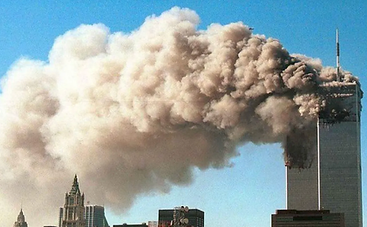
Between the ages of 6-21 years old she has an unforgettable, recurring nightmare about planes hitting skyscrapers, in NYC (their native homeland), causing them to fall down on top of the people she loves.
She shares this nightmare, repeatedly, with her Mother, who recounts it to friends and family, over telephone, during that period.

Kidnapped into a dual‑life of secrets, violence, fundamentalism, and courtroom back‑hallway deals, she is deposited into the raw, shimmering heat of 1970s Las Vegas. An indigenous “tomboy” is raised in the shadows of two "cut-throat" industries; entertainment and gaming. Raised by sicilian-italian, immigrant and first‑generation grandparents, and her jewish auntie and uncle, from Brooklyn, while grieving a string of deaths so dense it felt like a desert heat wave made of ghosts.
Adults wispered, She filmed.

Her first camera—a SONY Betamax, camcorder, with sound—became her translator for a world where truth was a luxury and lies were currency.
“In a city full of lights, I learned to trust one star.”

The Childhood Forged by Frances;
Brought to life by Mr. Scorsese, and God Herself...
(in Her Funniest Mood)
Her family story read like a surreal, fully credited, spin-off of The Godfather, Apocalypse Now, Blackkklansman, Goodfellas, Patton, Casino, The Hurt Locker and Wakanda Forever (combined)— mostly Sicilians with charm, looks, ambition, heat, flaws and a dash of chaos; who migrated west, in waves, chasing neon promises, silver screens and linings, and gaming gold.
...and the little girl who was born "too late."
Her cast of relatives stepped straight on to Coppola's ledgers in 1970 and jumped out from Scorsese’s in 1990: complex characters with hearts- too big, tempers- too fast, english- too broken, and secrets- buried deeper than the oldest "Vegas" foundations.
And in the irony only life can write, the "tomboy" who grew up encircled in the protective arms of the "old guys," sheltered inside the small bubble of a gaming & entertainment family, when all she ever wanted to escape both;
would spend her entire adulthood trying to fight her way out of her culture, cleanly, only to later discover that throughout all of the traumas of love, war and conflict, she had unknowingly EARNED her seat at the camera that Francis Ford Coppola once described as the most coveted view in cinema:
"The intimate view at the cross-section of love and conflict."
Courtesy of: Getty Images
The view that holds family, power, systems, violence, and grace in the same trembling hand.

But she didn’t earn it in a studio. She earned it by signing up, which she did, proudly. By showing up and paying attention, every day. And by self-navigating three wars and one conflict that lasted for more than four decades.
Camera strapped on. Conscience intact. Ethical compass— calibrated.
“Between the rows of grapes and the paths of starlight, Papa and I were written together—two souls hanging from the same vine of stars, ripening slowly beneath the same ancient sky until I finally became, what he lovingly referred to as, a 'California Rasin' ”

.jpg)
Papa and Kelly- Spring 1979
Her entire, "post-war" life becomes a nightmare of a pilgrimage, in itself, back to remembering who she was (before the wars). Back to the battle-buddy who promised he'd wait "as long as it takes," and back to the families she CHOSE to go to war for, in the first place.
—Back toward the people who would tell her the truth of who she was before the murder of one of her closest and dearest friends and the wars that subsequently followed.
And when she began to find them, fragment by fragment, piece by piece, it felt like developing old film negatives: slowly, carefully, revealing a picture that had always been there; but she could never quite fully see through the fog-of-war.

A Love Story in the Middle of a Desert "Storm"
She had known true affection before—mostly "puppy love," and surface-level attachments. But only one boy, later, a man, stirred that old, inherited ache that had always existed inside of her. The part of her heart that spoke only in sicilian, lead by intuition and believed love wasn’t a choice, but a birthright- in the form of "pursued happiness." The kind of love that lived in the blood like DNA—lasting, strong, unforgettable.
It belonged to him from the start. And she could only pretend it didn't for so long. As children, he took her to cinaplex theatres to watch doomed romances, and their forged silences told her everything she needed to know: this boy—fear, fury, fire—would, one day, become a man, and free her from the bondage that coiled them both in deafening silence.
To carry her out from under the neon glare of a place that never softened, never forgave.
But the desert never loved him the way he deserved to be loved.
It ignored him.
It threw him away.
So she took the wheel.
As teens, it was her who was charting their way forward, pulling them both out of wreckage they didn’t cause, but were born into.
Just two kids, rooted from New York to California to the "Old Country," raised in the ruins of silence and violence, learning that sometimes love isn’t the rescue —it’s the reason you keep running.
They ran away together, thinking escape meant distance. It didn’t.
It meant bravery.

“If wars were the only storms coming between us, I would cross them, blindly. He has always been the only star my soul sails toward, so I always know where I end and he begins." But war was easier. Peace, however, would prove to be much more difficult."
It meant choosing (and letting go of) each other when the world offered them nothing but reasons to be afraid of it.
“Le nostre anime, firmate prima ancora di nascere, furono scritte insieme nelle stelle —
dove i nostri antenati tracciarono il cammino con la stessa mano che guida la luna.
E quando ci ritroviamo nella vita, è solo il cielo che ricorda ciò che noi abbiamo dimenticato.”
—tucked between PTSD, lost memories, desert landscapes, wars, brain injuries, cameras, courtrooms, kids, prisons, casinos, political and athletic arenas, alike. Famous foils, weddings and funerals; and the very REAL childhood nightmare about falling towers, in the city they were all rooted in, that represented only a tenth of how badly it hurt to lose one another, back then.
And, as if destiny couldn’t resist its own timing, a movie appeared—released mid-tour, in theatre, when my heart was already carrying too many reels of its own...

Las Vegas: A City Molting Into Itself
In the 1970's-80's Las Vegas was a place shedding one skin for another. And it was growing at "breakneck speed."
The city began shedding its skin, again, in 2000s-10s, with similar "booms" and "busts," likend to those of the 70's and 80's. Neon villas turned to megaresorts, local games to super-stadiums and "high-stakes" matches; and surveillance seeped into every corner—from casino pits to cul-de-sacs to hotel rooms to wash rooms.
History cycling through, once more. This time, like a giant tsunami, ready to consume an entire city and everything it ever held dear.
Migration waves followed tragedies. Families folded into the desert economy of spectacle and secrecy. In this mosaic, she grew up too fast, saddled with raising younger siblings and the neighborhood boys, from "across the tracks," like mother earth, while charting her own, "future" children like a celestial map.
The burden of knowledge—kidnappings, blackmail, bribery, crime—settled onto her shoulders before she could spell half those words. And one question echoed louder with every passing year:
How do you END a cycle of violence?
“It was a little after 3 am at Fort Bragg. I still slept with CNN humming in the background, a bad habit left over from the war. My heart started pounding when I heard them repeating the name of my hometown; over, and over again. I slowly opened my eyes. but when I could finally get them to focus on the screen, I saw something I had never seen before — something I will never be able to unsee, again.”

Courtesy of: Las Vegas Review Journal
She didn’t know then that this question would one day become the thesis of her first feature film.

The Families, the Murders, and the Films That Changed Everything
A series of sudden, tragic deaths in the 70's and 80's—family members, across the country, began dropping like a desert heat wave.
— this was later followed by the tragic deaths of several of our tomboy's childhood friends in Las Vegas, during the 1990's, traumas too deep to face WITHOUT the essence of war surrounding her.
Grief became her persistent shadow -- before she was ten years old.
And then, in another one of life’s strangest twist:
A movie was released.
A project she thought would be small, quiet, personal.
Instead, it catapulted an introverted, "tomboy," director onto a path she never chose—but one that seemed to have been chosen for her from the moment that Betamax hit her four-year-old hands;
The longest run, for President of the United States, in history.
The Parallel Directors
Directing is not yelling “action” and sitting in a folding chair with your name on the back.
Directing is listening.
Directing is surviving your story long enough to tell it honestly.
Directing is waiting—sometimes decades—for the truth to ripen and prune.
She waited more than 40 years to tell TOMBOY.
To get the tone right.
To get the courage right.
To get the truth right.
A director owes their audience clarity, even when the past was anything but.
And this director refused to tell this story until they could honor every ghost, every wound, every "'fella," every "broad," every lesson, every artist, every player
—grape by grape, wave by wave, star by star.

"Directing is surviving your story long enough to tell it honestly.
Directing is waiting—sometimes decades—for the truth to ripen and prune.
She waited with patience and grace for more than 40 years to tell TOMBOY."
TOMBOY: The Story of the Girl Who Turned Survival Into Cinematic Gold
"TOMBOY" follows the journey of a kidnapped, indigenous child; raised in a world of entertainers, gamblers, cowboys, politicians, rodeo clowns, business men, love-by-the-hour and cinematic absurdity; who comes of age in Las Vegas, Nevada, during a turbulent time. "TOMBOY" goes from her childhood bedroom and into active conflict at just fifteen years old— with the purpose of gaining the knowledge and essential experience in order to, one day, hold the highest office.
A girl who navigates literal wars with a mother's empathy, a humble curiousity and quiet determination; and philisophical wars with nothing but a camera and an orphaned mother's fierce, protective, rage.
"TOMBOY" endeavors to explore the long journey through love and war for:
The sons who survive what they never should have seen to begin with.
The families that fracture and reform in the strangest shapes.
The lovers who choose each other in impossible storms.
The faith that reveals itself when identity is reclaimed.
And the one child who learned to read the stars
when the adults around her kept turning off the lights.
TOMBOY asks:
What does it take to break the cycle?
What does it cost to tell the truth?
And who do we become when the camera finally starts rolling?

"It is about the "daughters of the neon desert" who are forced to grow up way too fast, and the paths that their destinies are thrust upon, mostly by men they love, but more often, without equity."
Frances Coppola's Coveted “view” of Love & War — And How Another Three-Year-Old Filmmaker Earned Her Seat at the Camera
In Hollywood lore, few perspectives cut as cleanly as Francis Ford Coppola's view of love and war: the intimacy of family colliding with the machinery of power.
From the shadowed rooms of The Godfather to the hallucinatory fever of Apocalypse Now, Francis Ford Coppola carved through America’s compromised moral fog. He didn’t just tell stories — he illuminated them, revealing the power, corruption, and fragile humanity beneath the myths. In darkness, he found truth—and charted the American conscience.
That “view” isn’t a hand‑me‑down. It’s a discipline. A code. A seat you have to earn through lived experience in order for it to be worth it's weight in salt OR silver.
"You show up, you do the work, you keep the promise."
Our TOMBOY isn’t granted that seat. At four years old, she’s handed a Betamax camera, an unfortunate nickname, and a lifetime of abuse; not a "ticket-to-ride" or a "blessing-in-disguise."
She grows her craft the hard way—frame by frame, alliance by alliance.
The sicilian-american, indigenous daughter of two dysfunctional, "connected," entertainment and gaming families, who couldn't be more opposite (or opposed), she learns that loyalty and artistry are twins: you show up, you do the work, you keep the promise.
Papa teaches her to swim the pacific ocean waters, navigate by stars and to coax grapes from desert clay; in turn, she learns to navigate sets, gender politics, back streets, warfare. multiple cultural dystopias, lawfare and uncomfortable silences with the same humble patience and curiosity.


That’s how you EARN the camera. That’s how you KEEP it.

Want to get
involved?
Great! We are looking for organizations and individuals that wish to contribute to the making of this film; as historically accurate (and factual) as possible.
If you have a dossier that your organization wishes to submit for review or if you have unique, personal story that you feel would be a good fit in the film's narrative, and you wish to contribute, or; if you just wish to contribute your technical skills and sweat equity, please complete the contact form and participation survey that you will be redirected to when you hit "submit."
We will be in touch within the next 4-6 weeks to discuss the scope of your participation.
Please feel free to submit any materials that you would like to be considered for the project, in the meantime to: thetomboymovie@gmail.com
We look forward to working with you.
Kwiyʔa nagantü! Ciao!

